Showing posts with label Temple/Shrine. Show all posts

Wednesday, May 20, 2026

Brompton ride in KYOTO and NARA, Japan - Enjoyed the journey to Japanese tea plantations

It comes to the best season in Japan. And the season of newly harvested Japanese tea.

Let's go to Wazuka where embraces a lot of tea plantations to enjoy the views of fresh tea leaves at the end of the beautiful valley.

Sunday, December 17, 2023

Brompton Ride and Hike to the top of Mt. Mihara, huge, active volcano near Tokyo.

Brompton hill climbing ride to the trailhead and, leaving Brompton there, trekking walk to the top of Mt. Mihara, one of the world's largest active volcano which locates on Oshima Island only 100 km from central Tokyo.

When I reached the top just beside the huge crater, the view was spectacular and solemn. It was a fantastically fine day, no cloud, no wind at all, and exceptionally warm in Winter. I was lucky. Mt. Fuji was seen from the top of the island.

It was difinetely the best RIDE & HIKE ever for me and my Brompton.

Tuesday, April 10, 2018

Your Name.

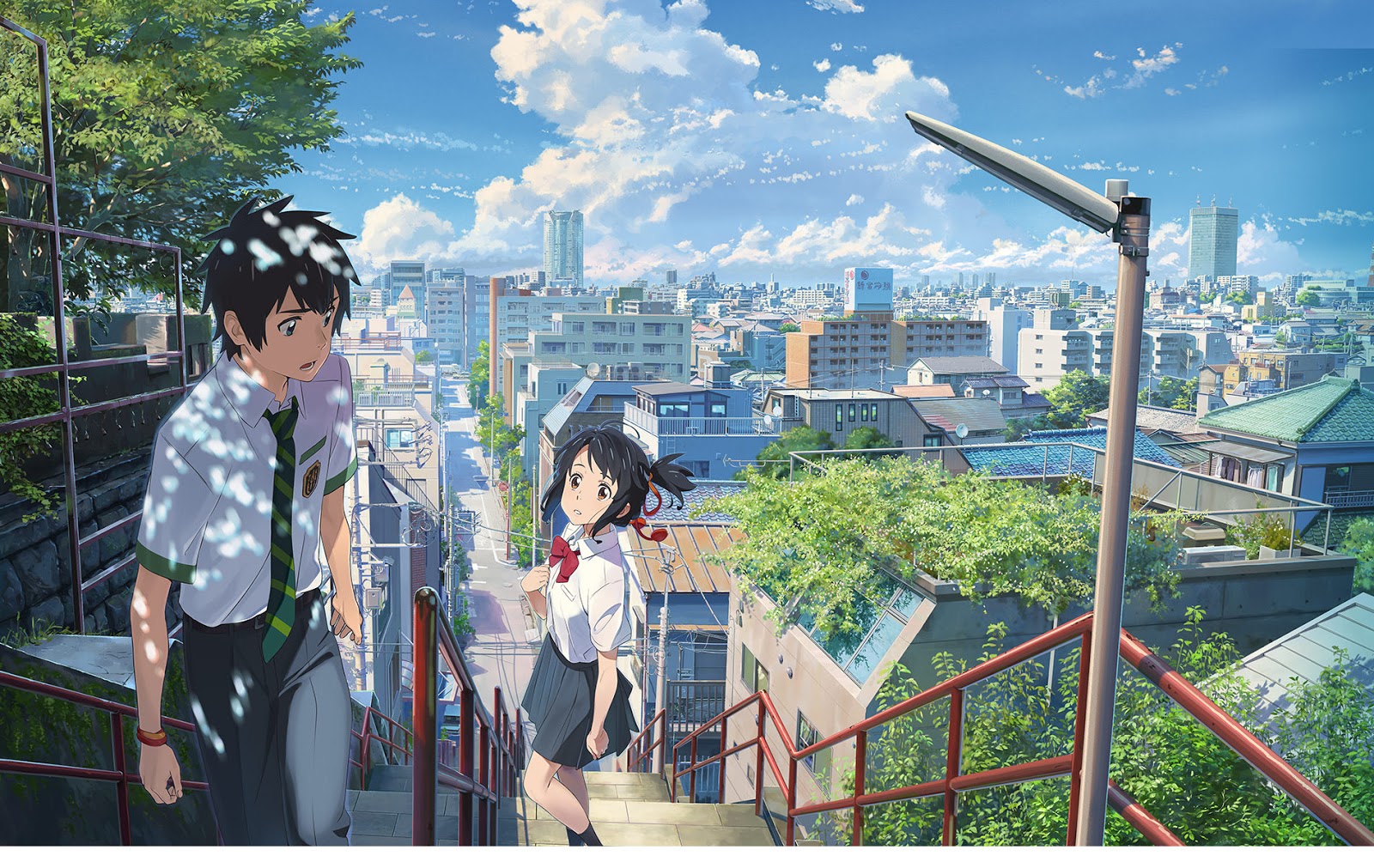
"Your Name." (Japanese title:  Kimi no Na wa.) is a 2016 Japanese animated film created and directed by Makoto Shinkai with music composed by Radwimps. It tells a fantasy of time travel and body swap between high school girl in rural Japan and a high school boy in Tokyo. It achieved a major commercial success and received widespread acclaim.


High school girl Mitsuha has become bored of her traditional life in beautiful Hida mountain region where she was born in a shrine as a successor of a sacred maiden.


She wishes if she were a teenage boy in modern Tokyo and, on one day, she had it in a dream. However, when she sees a message on her notebook asking "Who are you?" and when her friends react at her strange behavior on the previous day, she suspects something is going on. At the same moment, high school boy Taki experiences the same thing.


They finally realize that their spirits swap back and forth at random and start communicating with each other by leaving notes and messages in notebooks and smartphones. Mitsuha enjoys Taki’s high school days in Tokyo and Taki also becomes accustomed to the Japanese traditional life in an unknown rural village. During the time, Taki wonders that Mitsuha's latest note tells about a comet approaching to the Earth as a nationwide news but he never hears about it.


One day, Taki, as Mitsuha, accompanies her grandmother and sister to go to the sacred place in the mountain. The sacred body as a huge stone is located far in the caldera of the mountain top. It is a regular event for the shrine family to leave Kuchikamizake, the ritual sacred sake, for the god stone located on the mountain. Grandmother tells Mitsuha (Taki) that there is the body of the village guardian god who rules time, human experiences and reconnections. For some reason Taki is impressed by her words. Grandmother seems to notice Mitsuha is not Mitsuha but Taki on that day.


After a while, the body switching suddenly ends. He decides to visit her hometown though he does not know its name and where. Based on his memory of the scenery, he finally reached Hida-Takayama which has to be a vicinity of Itomori Villege where Yotsuha lives but hears that the village was vanished 3 years ago due to an unexpected fall of a fragmented meteorite.


Taki understands that the disaster happened exactly on the ritual day 3 years ago when he watched a beautiful meteor shower from the balcony. He finds the names of Mitsuha, her sister, grandmother and other people in the list of victims. He suddenly realizes their timelines were separated by three years. Taki despairs but an idea comes across. He goes to the mountain top where he once visited as Mitsuha with her sister and grandmother in his dream.


~~~~~~~~~~~~~~~~~~~~~~~~~~~

Five years later, Taki does not remember anything but he senses he is missing something important, being interested in the Itomori's miracle that most of the inhabitants survived by chance due to the mayor's unanticipated direction.

One day, Taki and Mitsuha recognize each other when their trains draw parallel near Yoyogi Station. They disembark in the different station (because he was on Chuo line and she was on Sobu line.) and search for one another, finally meeting each other on a stone staircase near Sendagaya station. Feeling as if they have met before, they ask for each other “what’s your name?” with burst of tears.
source: Kimi no Na wa Official Page http://www.kiminona.com/


End of the story
-----------------------------------------------------------------------

If you bring Brompton to Japan, you may visit locations where Mitsuha and Taki live and pass each other. 

Trailer:

Thursday, March 10, 2016

Tokyo Temples and Shrines to go

When you visit Tokyo, let's go to the shrines and temples for a pray of your travel safety!

Meiji Jingu Shrine (JR Harajuku Station)
Meiji Shrine is dedicated to the deified spirits of Emperor Meiji and his consort, Empress Shoken. The shrine was completed and dedicated to the Emperor Meiji and the Empress Shoken in 1920. Emperor Meiji was the first emperor of modern Japan. He was born in 1852 and ascended to the throne in 1867 at the peak of the Meiji Restoration when Japan's feudal era came to an end and the emperor was restored to power.


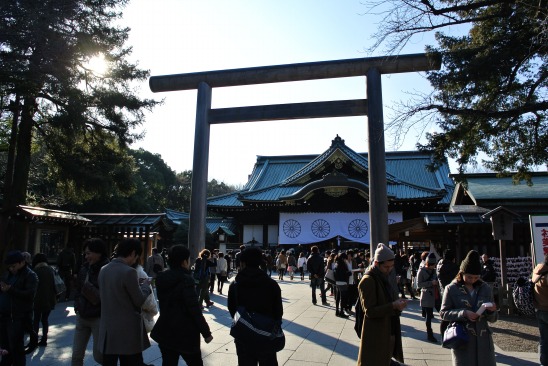
Yasukuni Shrine (Subway Kudanshita Station)
The origin of Yasukuni Shrine was established as Shokokusha in the second year of the Meiji era (1869) by the will of the Emperor Meiji. In 1879, it was renamed Yasukuni Shrine. Yasukuni Shrine was established to commemorate and honor the achievement of those who dedicated their precious lives for their country.


Hie Shrine (Subway Akasaka Mitsuke Station)
In 1478, Ota Dokan constructed Edo Castle on the site of the present Imperial Palace. He also erected a Sanno-Hie Shrine in the compound for a guardian deity of the castle. That was an origin of Hie Shrine. The Shogun Ieyasu Tokugawa began ruling Japan from Edo Castle. He also became a patron of the Hie Shrine and worshipped the deity as the protector of Edo, the old name for Tokyo. The citizens of Edo also had the strongest faith in Hie Shrine, which enshrined the guardian deity of the Shogun. In 1657, Hie Shrine and a large part of Edo was destroyed by fire. However, in 1659, Shogun Ietsuna Tokugawa rebuilt the shrine at its present location. Regrettably, the shrine buildings were burnt down again in the bombing of Tokyo during the Second World War, in 1945. The present shrine buildings were constructed in 1958.


Zojoji Temple (Subway Onariomon Station/Shiba Koen Station)
Zojoji was founded in 1393 as an orthodox and fundamental nembutsu seminary for Jodo shu in the east Japan region. After the start of the Edo Period when the Tokugawa shogunate ruled Japan, Zojoji became the family temple of the Tokugawa shogunate family and an unparalleled grand cathedral was built. In those days, its precincts covered an area of 826,000 square meters which also contained 48 smaller attached temples and about 150 grammar schools. Moreover, as many as 3,000 priests and novices always resided here as students.


Kameido Tenjin (JR Kameido Station)
Kameido Tenjin Shrine is located east side of Tokyo Metro. It is famous for its Fuji Flower. Kameido Tenjin was built in 1646 to enshrine Sugawara no Michizane, the God of Education. 


Kanda Myojin (JR Ochanomizu Station/Subway Nezu Station)
This shrine is the chief guardian god of Edo and was established in 730. Local people are very proud of Kanda Myojin Shrine's very long history over 1270 years. Kanda Myojin Shrine is very popular with the local people because they feel that if they worship here it will give them: happy family life, success and prosperity in their businesses, and will help them to find a well-matched marriage partner. Recently, because Kanda Myojin Shrine is not so far away from Akihabara, it has become the guardian of IT business. People can get a lucky charm here called the "Protection and Safe keeper of IT Data", which has become increasingly popular. Every year during the New Years celebrations, many of the engineers and people who run businesses from the area come to Kanda Myojin Shrine and buy this lucky charm.


Finally Sensoji Temple in Asakusa. It is one of the most popular places to go among foreign travelers. (Tobu and Subway Asakusa Station)


Each of those temples and shrines have their own history and roles in the traditional Japanese life. You can learn a part of Japanese religions, culture and tradition through visiting the places.


Saturday, May 10, 2014

Brompton goes to Nikko Onsen Temple


I am sure that you know Nikko and Tosho-gu Shrine which was built by Shogun family more than 400 years ago.

But do you know there is Onsenji, a Buddhist temple with a secluded, religious, and historic hot spring in Nikko Yumoto Onsen?

[Transportation examples]
Tobu Railway (RAPID): Asakusa Station dept. 06:20 → Tobu Nikko Station arr. 08:25
Bus: Tobu Nikko 08:40 → Yumoto Onsen 10:05
Tobu Railway (RAPID): Asakusa Station dept. 08:10 → Tobu Nikko Station arr. 10:19
Bus: Tobu Nikko 10:40 → Yumoto Onsen 12:05
All nikko pass 4,520 yen (Train & Bus)
TOBU RAILWAY CO., LTD.

Brompton and I arraived at Tobu Nikko Stattion where was the nearest station to Nikko Tosho-gu, a famous Shito shrine complex which was registered as a World Heritage site in December 1999.
http://www.toshogu.jp/english/


Today I am going to the secret hot spring before visiting that shrine complex. An elevation of the Station is 543 meters. The elevation of Yumoto Onsen, today's destination, is 1472 meters. You had better take bus rather than by Brompton. Yumoto Onsen is connected with central Nikko by Tobu bus. Buses leave from Tobu Nikko Station and are bound for Yumoto Onsen. There are one or two buses per hour.


Arrived.


As it is mid May, mountains of Oku Nikko are yet covered with snow. Nikko Yumoto Onsen is still in Winter and waits for Spring.


From Yunohira Marsh, where fountainheads of Yumoto Onsen are located, you will see Onsen-ji, Hot Spring Temple. The hot water must be very fresh!


Each fountainhead is covered by a wooden roof. The yield of the fountain is enormous enough to supply not only to hotels of the vicinity but also to distant places all around the Nikko area.


Let's go to the temple.


Onsen-ji Temple was established in 788 by Saint Shodo who was from Shimotsuke region.


When I rang a bell, a young bald kid appreared to open the gate. I thought that he must be an apprentice of the temple but I found that he was just a grandchild of the chief priest of this Buddhist temple. The kid and the wife of the priest escourted me to the bath. Let's be soaked in a hot spring!


See this color and strong smell of sulphur! Wonderful!


When I finished bathing, I was treated with rice crackers and Japanese tea. Just for reference, you need to pay "dedicatory rest" instead of charge or fee. It is because a temple is in difinition "religious corporations" in terms of Japanese tax law.


It was good hot spring and I enjoyed. I am thankful to the god (Buddha?) and nature.

After this Onsen experience, you go back to Tobu Nikko station to visit Tosho-gu, the famous shrine complex of world helitage!

http://www.toshogu.jp/english/access/index.html
http://www.lonelyplanet.com/japan/north-of-tokyo/nikko/sights/religious/tosho-gu?ctv=control