In order to escape from terrible heatwave in summer, I tend to go anywhere well beyond 1000m in its elevation in the past weeks. Today's destination, Mt. Tohnodake, is located in Tanzawa Mountains and popular for its spectacular view with Mt. Fuji and other high mountains around it.
Brompton hill climbing ride to the trailhead and, leaving Brompton there, trekking walk to the top of Mt. Mihara, one of the world's largest active volcano which locates on Oshima Island only 100 km from central Tokyo.
When I reached the top just beside the huge crater, the view was spectacular and solemn. It was a fantastically fine day, no cloud, no wind at all, and exceptionally warm in Winter. I was lucky. Mt. Fuji was seen from the top of the island.
It was difinetely the best RIDE & HIKE ever for me and my Brompton.
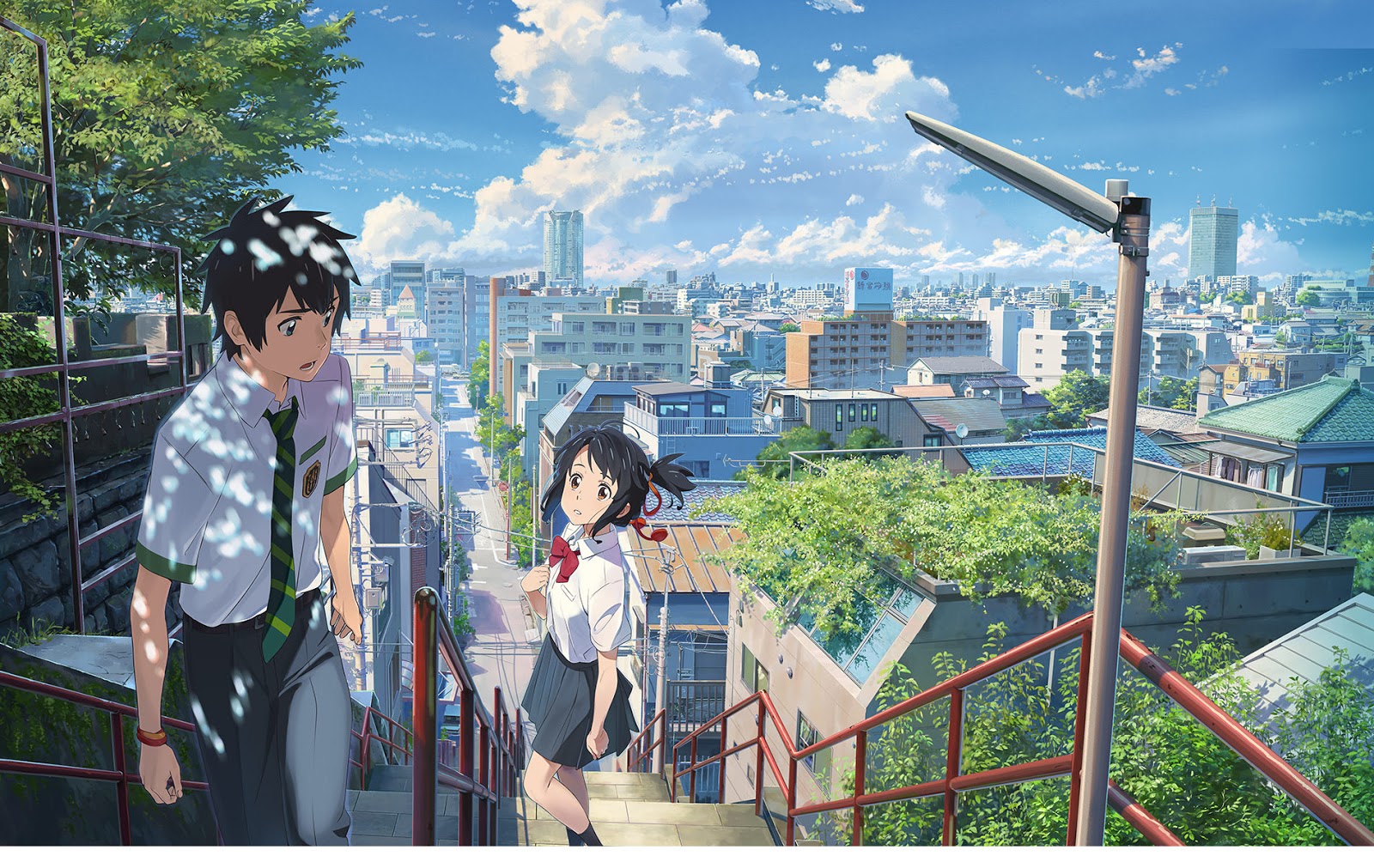
"Your Name." (Japanese title: Kimi no Na wa.) is a 2016 Japanese animated film created and directed by Makoto Shinkai with music composed by Radwimps. It tells a fantasy of time travel and body swap between high school girl in rural Japan and a high school boy in Tokyo. It achieved a major commercial success and received widespread acclaim.
High school girl Mitsuha has become bored of her traditional life in beautiful Hida mountain region where she was born in a shrine as a successor of a sacred maiden.
She wishes if she were a teenage boy in modern Tokyo and, on one day, she had it in a dream. However, when she sees a message on her notebook asking "Who are you?" and when her friends react at her strange behavior on the previous day, she suspects something is going on. At the same moment, high school boy Taki experiences the same thing.
They finally realize that their spirits swap back and forth at random and start communicating with each other by leaving notes and messages in notebooks and smartphones. Mitsuha enjoys Taki’s high school days in Tokyo and Taki also becomes accustomed to the Japanese traditional life in an unknown rural village. During the time, Taki wonders that Mitsuha's latest note tells about a comet approaching to the Earth as a nationwide news but he never hears about it.
One day, Taki, as Mitsuha, accompanies her grandmother and sister to go to the sacred place in the mountain. The sacred body as a huge stone is located far in the caldera of the mountain top. It is a regular event for the shrine family to leave Kuchikamizake, the ritual sacred sake, for the god stone located on the mountain. Grandmother tells Mitsuha (Taki) that there is the body of the village guardian god who rules time, human experiences and reconnections. For some reason Taki is impressed by her words. Grandmother seems to notice Mitsuha is not Mitsuha but Taki on that day.
After a while, the body switching suddenly ends. He decides to visit her hometown though he does not know its name and where. Based on his memory of the scenery, he finally reached Hida-Takayama which has to be a vicinity of Itomori Villege where Yotsuha lives but hears that the village was vanished 3 years ago due to an unexpected fall of a fragmented meteorite.
Taki understands that the disaster happened exactly on the ritual day 3 years ago when he watched a beautiful meteor shower from the balcony. He finds the names of Mitsuha, her sister, grandmother and other people in the list of victims. He suddenly realizes their timelines were separated by three years. Taki despairs but an idea comes across. He goes to the mountain top where he once visited as Mitsuha with her sister and grandmother in his dream.
~~~~~~~~~~~~~~~~~~~~~~~~~~~
Five years later, Taki does not remember anything but he senses he is missing something important, being interested in the Itomori's miracle that most of the inhabitants survived by chance due to the mayor's unanticipated direction.
One day, Taki and Mitsuha recognize each other when their trains draw parallel near Yoyogi Station. They disembark in the different station (because he was on Chuo line and she was on Sobu line.) and search for one another, finally meeting each other on a stone staircase near Sendagaya station. Feeling as if they have met before, they ask for each other “what’s your name?” with burst of tears.
source: Kimi no Na wa Official Page http://www.kiminona.com/
Have you ever been to Japan, a mystic but modern country with its long history and unique culture. Thanks to its perfect public transportation network, you can go to any place where you are interested in with your Brompton. I would like my dear Bromptoneers to visit those amazing places when you have a chance to visit Japan with your Brompton. I selected 10 wonderful destinations to go. Click the title or photo in order to go to the article.
Kamuiwakka Hot Waterfall is a hot spring river coming out from Iwo Mountain located in the mid of Shiretoko Peninslar. Shiretoko is UNESCO's World Heritage site because of its rich and beautiful nature. Meet a wild bear and fox there! (but please be careful.)
2. Kamikochi - You can watch the Best Autumn Tints Ever(Nagano)
Karasawa is getting to be known as a place of wonderful autumn tints of blazing yellow and red backdropped by high mountains with their ridges and moraine. Please enlarge the above photo!
3. Shimanami, a heavenly road over the sea (Ehime and Hiroshima)
If you want to go to the best road for cycling, I recommend you to go to SHIMANAMI KAIDO. The road has a cycling lane all the way from Onomichi to Imabari of about 70km. Each wonderful bridge has a bikeway. You might want to participate the great cycling event "CYCLING SHIMANAMI 2016" held at Japan's most beautiful cycling route over the sea.
The setting of this onsen couldn’t be more dramatic: it’s located in a rocky cleft in the seashore of the tiny island Shikine-jima, an island only a few hours’ ride of high-speed jet ferry Seven Islands from Tokyo. The hot spring pools are formed by the seaside rocks. It’s one of those onsen that only works when the tide is right.
5.Tateyama-Kurobe Alpine Route and Onsen (Toyama and Nagano)
Tateyama-Kurobe is one of the most scenic areas surrounded by dozen of 3000 meters-and-up mountains. Very popular among foreign travelers. I recommend you to start from Shinano-oomachi Station and get through a long tunnel which was originally built for hydro-electric power plant and dam construction. Shinano-oomachi Station is, by Azusa Express Train, about 3 and half hours away from Shinjuku Station
6. Ubayu Hot Spring - An ultimate onsen
Ubayu is a hot spring located in 250 km north of Tokyo. It is hidden by a deep mountain valley with an elevation of 1,250 meters. Ubayu was found 500 years ago by Lord Endo who started Masugata-ya, an only Onsen lodge there. Masugata-ya has been succeeded by Lord Endo's offsprings for seventeen generations since then.
7. Norikura Skyline Highway - a road to the skyline
Norikura Mount Skyline highway is famous for the highest point of the paved vehicle road in Japan. The road has an interesting history. It was completed in 1942. There was a hidden military facility for research and development of warplane engines. The place was thought to be the best place for jet engine experiment because of its high elevation with thin air.
8. Yari Onsen, the best hot spring above the clouds.
Yari Onsen is a hot spring above the clouds. Its hot spring, gushing out from the earth more than 700 litters per minute, is famous for its curing effect, wild location and incomparable panorama from the bath. The mountain path led to Yari Onsen never accepts any bike due to its rocky trail and dangerous snow ravines still existing in summer.
Do you know snow monkeys? A gourp of monkeys in Jigokudani Onsen Wild Monkey Park enjoys a hot spring in winter. If you have Brompton, you can easily go out for a day trip to the place from Tokyo with the combination of super express railways and Brompton.
10.Tsukiji Fish Market
Tsukiji Market is best known as one of the world's largest fish markets, handling over 2,000 tons of marine products per day.
If you love gold, Ballarat is a good place to visit. Ballarat has also a history to learn. A part of the history in Australia started from the town. I wanted to confirm that the town still left its glitter of the glorious days.
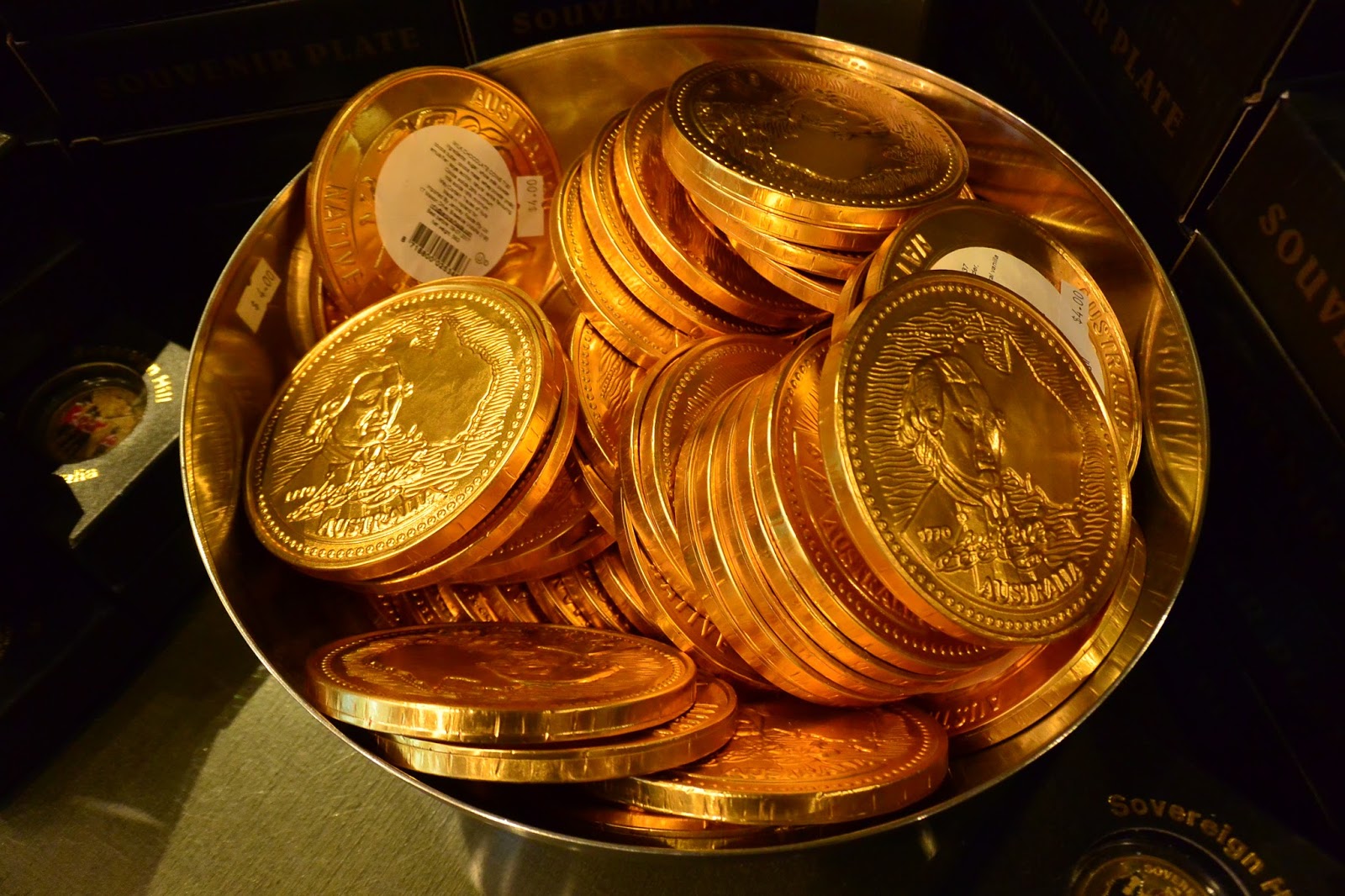
(The above is one of the gold displayed at Gold Museum.) During holidays, Brompton and I went to Ballarat, a town of gold mining, by V/Line.
[data] distance: 7.3km max. difference of elevation: 89m average % of slope: total 0.5% ascent 5.3% descent 4% acquired elevation: ascent 120m descent 80m The historic buildings in Ballarat are well preserved and maintained.
We were following the Canadian River toward Sovereign Hill.
Arriving in the nineteenth century grand old town of Sovereign Hill.
And finally reached the gold mining site. Unfortunately gold mining had ceased for long time.
Instead of gold mining, I enjoyed a show of GOLD POUR.
To make up for a large gold nugget, I acquired a dozen of gold chocolates for my friends and family.
Do you know Takayama? Takayama is a beautiful castle town of Hida region surrounded by mountains in every direction. The city is usually commonly referred to as Hida Takayama in order to differentiate it from other places named Takayama. The town maintains a traditional touch like few other Japanese cities, especially in its beautifully preserved old town called Sanno-machi. Takayama is also known as a town of great traditional festivals taking place on April 14/15 and October 9/10 every year. It now ranks as one of the prime candidates among foreign travelers wishing to watch and experience Japanese traditional scenery of the town. Sanno-machi, Takayama's old town, has been beautifully preserved with many buildings and whole streets of houses dating from the Edo Period (1600-1868), when the city thrived as a wealthy town of merchants connecting the west region and east region of Japan.
You start exploring from JR Takayama Station. To reach Takayama Station it takes 2 and half hours from Nagoya Station.
By Brompton you reach the Sanno- machi historic District in 5 minutes.
The streets in the district offer traditional Japanese styles. You can enjoy strolling around and drop by cafes, restaurants, temples, castle remains and museums.
Why not visit Takayama with our Brompton?
The following URLs contain useful information about Takayama:
When you visit Tokyo, let's go to the shrines and temples for a pray of your travel safety! Meiji Jingu Shrine (JR Harajuku Station) Meiji Shrine is dedicated to the deified spirits of Emperor Meiji and his consort, Empress Shoken. The shrine was completed and dedicated to the Emperor Meiji and the Empress Shoken in 1920. Emperor Meiji was the first emperor of modern Japan. He was born in 1852 and ascended to the throne in 1867 at the peak of the Meiji Restoration when Japan's feudal era came to an end and the emperor was restored to power.
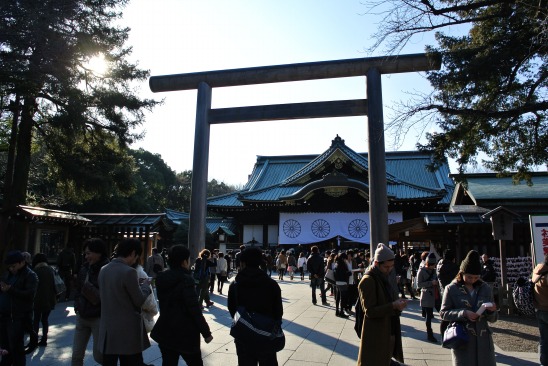
Yasukuni Shrine (Subway Kudanshita Station) The origin of Yasukuni Shrine was established as Shokokusha in the second year of the Meiji era (1869) by the will of the Emperor Meiji. In 1879, it was renamed Yasukuni Shrine. Yasukuni Shrine was established to commemorate and honor the achievement of those who dedicated their precious lives for their country.
Hie Shrine (Subway Akasaka Mitsuke Station) In 1478, Ota Dokan constructed Edo Castle on the site of the present Imperial Palace. He also erected a Sanno-Hie Shrine in the compound for a guardian deity of the castle. That was an origin of Hie Shrine. The Shogun Ieyasu Tokugawa began ruling Japan from Edo Castle. He also became a patron of the Hie Shrine and worshipped the deity as the protector of Edo, the old name for Tokyo. The citizens of Edo also had the strongest faith in Hie Shrine, which enshrined the guardian deity of the Shogun. In 1657, Hie Shrine and a large part of Edo was destroyed by fire. However, in 1659, Shogun Ietsuna Tokugawa rebuilt the shrine at its present location. Regrettably, the shrine buildings were burnt down again in the bombing of Tokyo during the Second World War, in 1945. The present shrine buildings were constructed in 1958.
Zojoji Temple (Subway Onariomon Station/Shiba Koen Station) Zojoji was founded in 1393 as an orthodox and fundamental nembutsu seminary for Jodo shu in the east Japan region. After the start of the Edo Period when the Tokugawa shogunate ruled Japan, Zojoji became the family temple of the Tokugawa shogunate family and an unparalleled grand cathedral was built. In those days, its precincts covered an area of 826,000 square meters which also contained 48 smaller attached temples and about 150 grammar schools. Moreover, as many as 3,000 priests and novices always resided here as students.
Kameido Tenjin (JR Kameido Station) Kameido Tenjin Shrine is located east side of Tokyo Metro. It is famous for its Fuji Flower. Kameido Tenjin was built in 1646 to enshrine Sugawara no Michizane, the God of Education.
Kanda Myojin (JR Ochanomizu Station/Subway Nezu Station)
This shrine is the chief guardian god of Edo and was established in 730. Local people are very proud of Kanda Myojin Shrine's very long history over 1270 years. Kanda Myojin Shrine is very popular with the local people because they feel that if they worship here it will give them: happy family life, success and prosperity in their businesses, and will help them to find a well-matched marriage partner. Recently, because Kanda Myojin Shrine is not so far away from Akihabara, it has become the guardian of IT business. People can get a lucky charm here called the "Protection and Safe keeper of IT Data", which has become increasingly popular. Every year during the New Years celebrations, many of the engineers and people who run businesses from the area come to Kanda Myojin Shrine and buy this lucky charm.
Finally Sensoji Temple in Asakusa. It is one of the most popular places to go among foreign travelers. (Tobu and Subway Asakusa Station)
Each of those temples and shrines have their own history and roles in the traditional Japanese life. You can learn a part of Japanese religions, culture and tradition through visiting the places.