Wednesday, March 2, 2016

Japan Travel Destinations for Bromptoneer (1) - Central Tokyo

For a visitor who is coming to Tokyo with Brompton, I would like to suggest must see destinations: ten popular areas in central Tokyo and other nine fascinating places to visit in its vicinity.

1. Central Tokyo

(1) Asakusa and Senso-ji
It is said that Asakusa is the oldest downtown of Tokyo. Sensoji, one of Tokyo's most  popular temples, is a Buddhist temple located in Asakusa. The temple was completed in 645, making it Tokyo's oldest temple. The legend says that in the year 628, two brothers fished a statue of Kannon, the goddess of mercy, out of the Sumida River, and even though they put the statue back into the river, it always returned to them. Consequently, Sensoji was built nearby for the goddess of Kannon. 

A shopping street called Nakamise leads from the outer gate of Sensoji to the temple's second gate, the Hozomon. The shopping street has a history of several centuries. Typical Japanese souvenirs are sold along Nakamise. 

(2) Akihabara
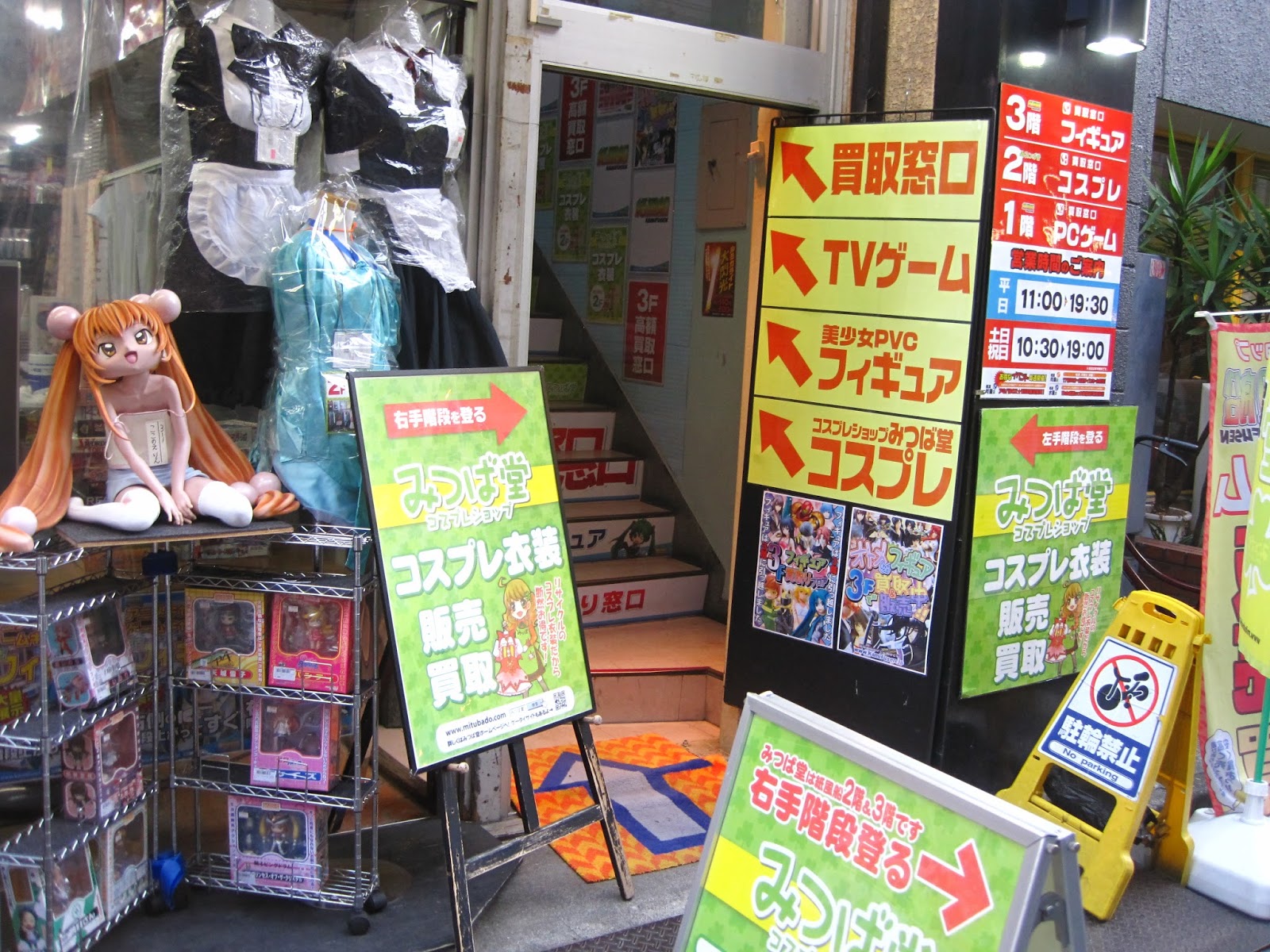
A computer nerd and gamer must go. 

You may visit a maid cafe with waitresses dressed in cute maid costumes. Maid cafes are cosplay themed restaurants where guests are served by waitresses that are typically dressed as French maids. In addition to serving food, the maids engage in conversation and games with the customers and treat them with the care and respectful language due to the master of a house. Maid cafes are popular with both men and women, and some of the cafes, like the @Home Cafe, offer English speaking maids.  
(3) Ginza Shopping Street
The Ginza is Tokyo's most famous premier shopping, dining and entertainment district, featuring numerous department stores, brand boutiques, art galleries, luxury restaurants, expensive night clubs and fashonable cafes. Wako (photo) is a famous department located in the center of the Ginza, selling luxuary goods. Wako started in 1881 as a retail division of Hattori Tokeiten, known as "SEIKO". In the other side of the street, there is Mitsukoshi, the largest and oldest department store in Japan, always filled with several hundreds of Chinese travelers. 

(4) Tsukiji Market
Tsukiji Market is best known as one of the world's largest fish markets, handling over 2,000 tons of marine products per day.The number of visitors to the tuna auction is limited to 120 per day, the maximum number which the market's infrastructure can accommodate. Tourists, who wish to see the auction, have to apply at the Osakana Fukyu Center (Fish Information Center) at the Kachidoki Gate, starting from 5:00am (or earlier on busy days) on a first-come, first-serve basis. A first group of 60 visitors will be admitted to the auction between 5:25 and 5:50, while a second group of 60 visitors will be admitted between 5:50 and 6:15.


(5) Imperial Palace (Kokyo) 
During Edo period Imperial Palace was an invincible fortress of Tokugawa Shogun Government surrounded by huge moats and stone walls. 

In 1868, when the shogunate was overthrown, the country's capital and Imperial Residence were moved from Kyoto to Tokyo (Edo was renamed to Tokyo). In 1888 construction works of a new Imperial Palace was completed. The palace was once destroyed by air raids of US force during World War II, and rebuilt in the same style afterwards.

(6) Marunouchi Business District
Marunouchi is one of Japan's most prestigious business districts and the first modern business district of Japan developed by Mitsubishi around 1900. You can walk Marunouchi Promenade to enjoy shopping and eating.

Tokyo Central Station is located at the east end of the area. The station building on the Marunouchi side is a prominent red brick building constructed in 1914. The original roof of the building was once destroyed by air raids during the war but recently renovated and reopened in its pre-war appearance. 


(7) Shibuya Crossing
A popular district among younger generations. One of the prominent landmarks of Shibuya is a large intersection in front of the station's Hachiko Exit. The intersection is heavily decorated by neon advertisements and huge video screens and gets filled with pedestrians each time the crossing light turns green, making it a popular photo spot for foreign visitors.


(8) Meiji Shrine (Harajuku)
Meiji Shrine is dedicated to the deified spirits of Emperor Meiji and his consort, Empress Shoken. The shrine was completed and dedicated to the Emperor Meiji and the Empress Shoken in 1920. Emperor Meiji was the first emperor of modern Japan. He was born in 1852 and ascended to the throne in 1867 at the peak of the Meiji Restoration when Japan's feudal era came to an end and the emperor was restored to power.

(9) Odaiba beach
Odaiba is a popular shopping and entertainment district on a reclaimed island in Tokyo Bay. It originated as a set of small fort islands (daiba literally means "fort"), which were built towards the end of the Edo Period to protect Tokyo against possible attacks from the sea and specifically in response to the gunboat diplomacy of Commodore Perry.

(10) Zojoji Temple and Roppongi
Zojoji Temple was built in the year 1393 and moved to its present location in 1598 by the first Tokugawa Shogun who selected it as his family temple. 

Roppongi (meaning "six trees") is a district in Tokyo that is well known as the city's most popular nightlife district among foreigners, offering a large number of foreigner friendly bars, restaurants and night clubs. Roppongi and the surrounding districts of Azabu, Hiroo and Akasaka are home to many embassies and a large expat community.


(continued)
Japan Travel Destinations for Bromptoneer (2) - Suburban Tokyo & Vicinity
Japan Travel Destinations for Bromptoneer (3) - Other special places to go


Monday, February 8, 2016

Mt. Nasu - Beautiful Snow Mountain with Brompton

Yesterday Brompton and I went out for a snow ride toward Mt. Nasu situated at about 150 km north of Tokyo. I wanted to see beautiful snow mountains in winter. In order to ride on the snow road, Brompton was equipped with a pair of 16-inch stud tires. 

Though the most upper part of Nasu Highland Road led to the gate of Mt. Nasu trail is closed to cars during winter, hikers can enter the closed section of 1.3 km at their own risk. During winter season there are a lot of climbers who want to climb snow-covered Mt. Nasu toward the peaks and to walk on the section .

[data]
route:  Oomaru Onsen busstop - Nasu Ropeway Station - Mt. Nasu - Oomaru Onsen 
distance: 7.33 km (4.81km to walk)
max. difference of an elevation: 494m


Brompton and I started from here. The road was closed to cars.

Fortunately snow on the road was only 2-3 inches that enabled Brompton to continue to climb. 

The sky was blue and there was almost no wind.

What a fantastic snow ride!

Brompton and I got close to the ropeway station. Due to heavier snow on the road from here, I needed to leave Brompton and started to walk on the snow-covered trail.

I just followed a group of experienced climbers.

This is the holy gate of Mt. Nasu, saying "mountain god". Yes, Mt. Nasu itself is a sacred object of the god and this Torii gate is an entrance to the holy area. Before the introduction of Buddhism, Japan traditionally had a worship of nature, named physiolatry. The tradition of physiolatory still exists in Japan and a great mountain like Mt. Nasu is often an object of strong faith among local people.

After 40-minute ascending on the trail, a shack came into my view on the ridge. That must be  the Toge Chaya Ato Shelter which is located in-between Mt. Asahi and Mt. Chausu.

When I looked at the snow mountain, groups of people were climbing in a row.


I arrived at the shelter in minutes.

As I was not tired, I wanted to climb a little more from the shelter for the better view.

Arrived at the point called Remains of Sulfur Mine. Here I was able to see steaming Mt. Chausu (1,915 meters), one of the peaks of Mt. Nasu, at close range. 

 In the back, look! This is Mt. Asahi, another peaks of Mt. Nasu, with an elevation of 1,896 meters. If you look the photo carefully, you will find a climber at the top of Mt. Asahi. (please click to enlarge.)


I really enjoyed the beauty of the snow mountains in Nasu.

After descending, I dipped myself into an open-air and natural hot river bath of famous Oomaru Hot Spring to relax.

Wednesday, January 27, 2016

Mt. Fuji Hill Climb Race 2016

Why don't you come and join the Mt. Fuji Hill Climb Race to be held on June 12 (sun)? 

Brompton and I will be a part of the race.

Riders go through the 25km distance and 1,255m elevation of the Fuji Subaru Skyline way heading for the 5th station of Mt. Fuji at an elevation of 2,305 meters.


A wonderful view from the hight of beyond 2,000 meters. 

Number of participants: About 10,000 riders
Race head quarter: Fuji-Hokuroku park stadium & Fuji-Hokuroku park car parking
Registration: Starting on March 18, 2016

http://www.fujihc.jp/english.html (last year) Will be updated soon!
http://funride.jp/announce/mt-fuji2016/ (Japanese)

Sunday, January 17, 2016

Ichinokurasawa Gorge in winter with Brompton - the most dangerous cliff for clibming

Yesterday I went to ICHINOKURASAWA for a snow ride with Brompton equipped with Scwalbe Winter, a pair of 16-inch stud tires. 

Situated east of Mt. Tanigawa-dake (1,977 meters), Ichinokurasawa is a rocky tract that sits at a bit less than 2,000 meters above sea level but is a place with steep cliffs, a complex topography, and fierce variations in the changing weather. The cliffs of Ichinokurasawa are among the three most notable rocky formations in Japan and attract Alpine climbers and gorge-climbing enthusiasts from across the country and overseas.

Though the road led to Ichinokurasawa is closed to vehicle due to snow layer exceeding 4 meters and risks of frequent avalanche during winter, climbers can enter the road from the gate at their own risk. Those who want to watch snow-covered Ichinokurasawa Gorge or dare to climb the cliffs to the peak during winter season start from the closed gate to go for about 3.4 km walk to reach there.

I wanted to see beautiful Ichinokurasawa in winter. One of the sites for mountain lovers said that in this season the snow volume around Mt. Tanigawa-dake was still much less than usual year and did not require heavy duty equipment. Hopefully the snow covers just a part of the road for a while.


[data]
route:  Tanigawa Ropeway Station to Ichinokurasawa, Ichinokurasawa to Doai Station 
distance: 8.5 km (3.4 km to Ichinokurasawa)
max. difference of an elevation: 225m
average % of slope: total -0.6% ascent 3.8% descent 4.8%
acquired elevation: ascent 119 m descent 219 m


From Tokyo, you may get on Joetsu Shinkansen to get off at Jomo Kogen Station (1.5 hour) and take a bus bound for Tenjindaira Ropeway Station (about 45 min.). Unfold your Brompton and let's start. 

The 3.4 km way to Ichinokurasawa started like this. Deep snow was beyond my expectation. Brompton and I suffered a lot. Only a good thing was that weather was nice. 

We reached at a half way point. Took a rest for a while.

Then restart. We reached at Machigasawa Gorge.

I met a gentleman who was on his return to the gate. He told that snow was not that heavy compared with usual year. Based on his frequent visits to the area, most of the trees were usually under snow surface during late January and February.


Finally reaching Ichinokurasawa.


Look! Though partly covered with cloud, I understood why this beautiful and noble figures had attracted a lot of climbers and mountain lovers. 

They were the most famous cliffs in Japan on which a lot of climbers challenged and lost their lives.

Based on statistics starting from 1931, accumulated number of victims in Mt. Tanigawadake is 805 as of the end of 2012 and most of them met fatal accidents in Ichinokurasawa during rock climbing. The number of the victims is recorded as the worst in the world in the Guiness Book.

I mourned and prayed for the victims. I was on the way back to the lower bound.

Monday, December 28, 2015

Let's go to Nakabusa Hot Spring for a snow ride and downhill

Yesterday I went to Nakabusa Hot Spring for a snow ride and downhill with Brompton equipped with Scwalbe Winter, a pair of 16-inch stud tires. 

Nakabusa Hot Spring is known as a lodge with an abundant hot spring yield. The lodge has 16 independent hot spring heads and wells, the largest number among hot spring lodges in Japan. Behind the Lodge there was Yakeyama, meaning burning mountain, where geothermal power is great and everyone can steam egg, potato and other food just by burying things. Nakabusa Hot Spring is also famous as one of the bases of trekking and climbing for the North Alps of Japan. The lodge is located at the trail head for Tsubakuro-dake (Mt. Swallow). 

During winter  it completely becomes isolated from outside due to road closure. Those who want to climb Tsubakuro-dake (Mt. Swallow) during winter or who want to experience the hot spring need to start from the closed Miyagi Gate to go for 4-hour walk to reach the trail head or Nakabusa Hot Spring Lodge.

But I have come across a good idea. Why don't use a bike with stud tires instead of walking a distance of 12 km? Though the closed road may covered by snow, Brompton and I can go through it by using Schwalbe Winter Tires with studs.


[data]
route: JR Azumioiwake Station (551m above the sea-level) to Nakabusa Hot Spring (1,462m)
distance: 17.6km 
duration: 3 and half hours
max. difference of an elevation: 910m
average % of slope: total 5.1% ascent 6.5% descent 5.6%
acquired elevation: ascent 952m descent 48m

https://www.google.com/maps/d/edit?mid=zVh_vanqLQwc.kucNwk0f5oF4&usp=sharing

It was a first time use of the Schwalbe Winter 16 inch tires this season. Last year I used them several times and were perfect but I was a bit concerned with the condition of this challenging route. Nakabusa Hot Spring is located at 1,500 meters above the sea level. The last few miles might be snow-covered. 


Early in the morning I arrived in JR Azumioiwake where was the nearest station of Nakabusa Hot Spring though it was still 17 km away to go and about 1,000 meters to ascend.

I unfolded my Brompton and left the station at 7:30 am when rain changed into snow flakes. 

On the way to the hot spring, Brompton and I got through the gate of Ariake Shrine whose god was Mt. Ariake of 2,268 meters. The road to Nakabusa shares the way to Ariake Shrine.


30 minutes later, we were arriving at Miyagi Gate which is closed for cars due to snow during winter. Only hikers and bikes can go.

Brompton and I entered the world of monochrome.


Snow coverage gradually increased as an elevation rose.

The road was completely covered by snow beyond 1,000 meter high. It was too cold to use iPhone.... My iPhone 5S suddenly shut down due to extremely low temperature for its battery when I took it out from my pocket to share a snow road view with my Brompton friends....

While it was too cold for iPhone, I was sweating a lot as the steep hill with more than 10% slope continued. 

Before I knew it, the sun started to shine. The weather report was correct.

However, snow was getting more and more. 

At last Brompton and I were approaching the hot spring.

A little before noon, we reached Nakabusa Hot Spring.

It's time to dip myself into hot spring. I hurried to an open air bath first. Look! In the center, there was a rock-build spout. Because of high temperature over 90 degree centigrade of hot spring, it is necessary to pour it down from the top of the tower to the tub in order to cool down to about 40-43 degree.


It was wonderful experience to look over the mountain and blue sky when bathing.

I noticed that I was thirsty. Let's drink a bottle of S. Pellegrino as usual.

2 pm. It was about time to go down the mountain. People in the lodge gathered to say good bye to Brompton and me. A tiny snowman also made farewell to me. Thanks and see you again!

Brompton and I started downhill. It was already obscured in the Nakabusa Valley because of its deepness. 

Sunset was earlier in this season. Brompton and I needed to hurry but care. The temperature was below zero. A pair of the Schwalbe Winter tires provided excellent grip and control on the icy snow road. Perfect! But I needed to control the speed and must be careful of using brake. 

The beauty of the monochrome color again. Brompton in the world of "Frozen".

Due to the low temperature and snow fall, the Brompton looked like a cake covered with sugar powder.

The road surface was frozen like mirror. I needed to ride carefully even with the Schwalbe Winter.

Continued downhill. I was able to see the end of the Nakabusa Valley from the cleavage. There was sufficient sunlight outside the valley. I still have a couple of time before the sunset.

When I looked up, there was Mt. Ariake, wearing cotton clouds. It was beautiful.


We arrived at the station. Let's go home for dinner.


It was a great ride with the Schwalbe Winter in this season. The performance was perfect even under tough conditions of the hilly road with snow and ice.